Sanford, Florida
Sanford is a historic waterfront city on the south shore of Lake Monroe, where visitors can connect with the St. Johns River and enjoy one of Central Florida’s most character-rich downtowns. Known for its preserved architecture, lakefront setting, and long transportation history, Sanford blends historic districts, local dining, boating access, and cultural attractions in a setting that still feels distinctly old Florida.
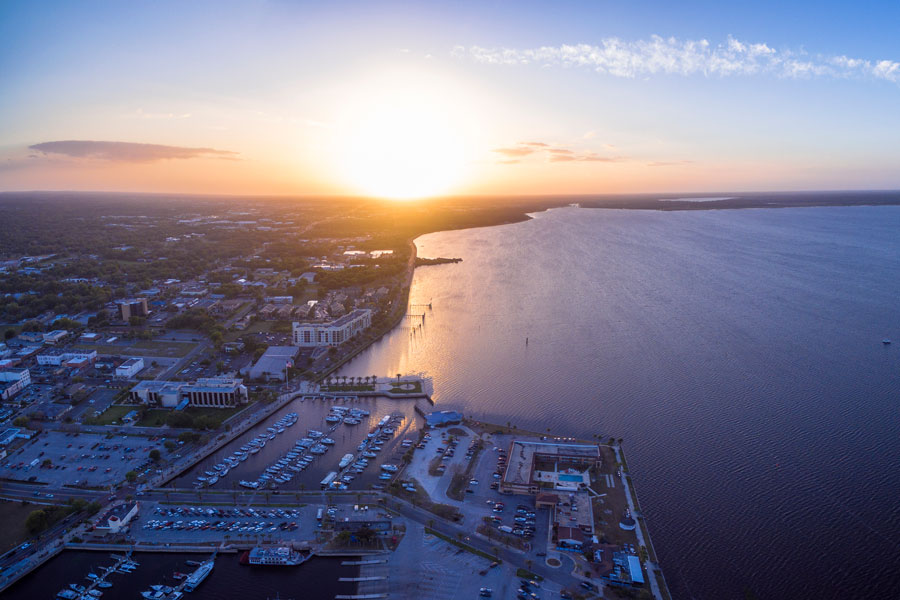
About The Community
During the Seminole Wars of the 1830s, the U.S. Army established Fort Mellon here. After the fighting subsided, settlers moved into the area and developed the community of Mellonville. With the rise of commercial steamboat traffic on the St. Johns River, the settlement became an important distribution point for inland Central Florida and an early center of local government and trade.

In 1870, Henry Shelton Sanford recognized the area’s strategic potential and purchased land west of Mellonville. He laid out a new city that he promoted as the “Gate City to South Florida.” Sanford was incorporated in 1877, and Mellonville was annexed in 1883. The arrival of the South Florida Railroad helped fuel a rapid boom, and by the 1880s Sanford had become a prosperous transportation hub with wharves, a railroad station, and a large hotel.
Important Links (Suggest / Report)

Henry Sanford also developed Belair, a citrus grove and experimental garden near the city. More than 140 varieties of citrus were tested there for their adaptability to Florida conditions, including fruit associated with the Valencia orange. The devastating freezes of 1894–95 badly damaged the local citrus industry, but Sanford adapted. By the early 1900s, it had become one of the nation’s leading vegetable shipping centers and earned the nickname “Celery City.”
In 1913, Sanford became the county seat of the newly created Seminole County. Naval Air Station Sanford operated here from 1942 to 1968, bringing jobs and new residents to the area. The former base is now the site of Orlando Sanford International Airport. Today, Sanford is known for its historic neighborhoods, growing downtown, waterfront parks, and diverse local economy. Health care in the area includes HCA Florida Lake Monroe Hospital.
Vicinity of Sanford
Additional Details
The Sanford Museum, created as a memorial to Henry Shelton Sanford, interprets the city’s history and the life of its founder through artifacts, manuscripts, and period collections. The Bettye D. Smith Cultural Arts Center occupies a restored pre-1925 building and continues to host exhibitions, performances, and community events. Sanford’s two historic districts, both listed on the National Register of Historic Places, are a major reason the city remains such a rewarding place to explore on foot.

Historic Sanford Memorial Stadium, originally built in 1951, remains a recognizable local landmark and hosts events on a seasonal basis, so it is wise to check current schedules before visiting. The city also offers numerous neighborhood parks and attractive public spaces along the waterfront. Memorial Park, overlooking Lake Monroe, is a pleasant stop for lake views, fishing access, and time outdoors near the downtown area. Visitors may also want to explore the Sanford RiverWalk, marina area, shops, restaurants, and breweries nearby.