Dry Tortugas National Park
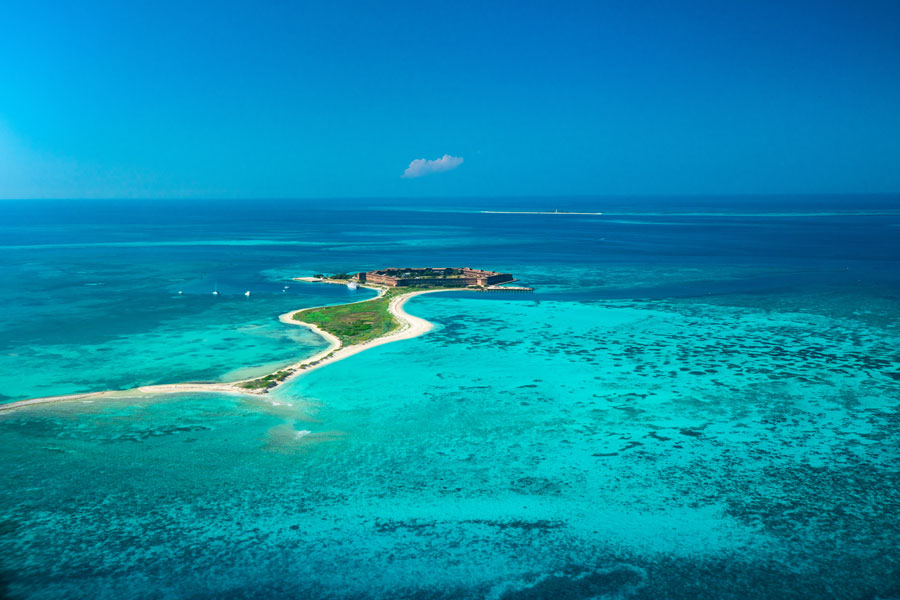
Located about 70 miles west of Key West, Dry Tortugas National Park protects nearly 100 square miles of mostly open water, coral reefs, seagrass beds, bird habitat, and historic Fort Jefferson. Reached only by ferry, private boat, or seaplane, this remote national park feels far removed from the rest of the Florida Keys. Its isolation is a big part of the appeal, giving visitors a rare chance to combine snorkeling, wildlife watching, beach time, and a walk through one of America’s most remarkable coastal forts.
The Dry Tortugas: A Unique Island Chain
- Geography:
The park consists of seven small islands and a vast expanse of surrounding water at the far western end of the Florida Keys. The setting is defined by sandy keys, shallow flats, coral communities, and striking blue-green water. - Name Origin:
The name “Dry Tortugas” dates to Spanish exploration. “Las Tortugas” referred to the many sea turtles found here, while “Dry” warned mariners that there was no reliable source of fresh water.
Fort Jefferson: A Historic Landmark
- Construction and Purpose:
- Construction began in 1846 and continued for decades, although the fort was never fully completed. Its strategic location was chosen to help protect important shipping routes through the Gulf of Mexico and the Straits of Florida.
- The massive hexagonal fort used more than 16 million bricks and includes a moat, drawbridge, gun rooms, and rows of arched casemates.
- Civil War and Beyond:
- During the Civil War, Fort Jefferson remained under Union control and also served as a military prison.
- One of its best-known prisoners was Dr. Samuel Mudd, who was convicted for his role in the aftermath of President Abraham Lincoln’s assassination.
- Modern Significance:
- Protected first as Fort Jefferson National Monument in 1935 and redesignated as Dry Tortugas National Park in 1992, the site remains a powerful symbol of coastal defense history, remote island life, and preservation in a demanding marine environment.
Natural Wonders
- Marine Life:
The park is a haven for marine biodiversity, with coral and patch reefs, seagrass beds, and clear waters that support species such as:- Sea turtles, including loggerhead and green turtles
- Nurse sharks and other coastal fish species
- Parrotfish, angelfish, barracuda, and many other reef-associated fish
- Birdwatching:
The Dry Tortugas are an important stopover and nesting area for birds, making the park especially appealing to birders. Species may include:- Sooty terns and brown noddies
- Magnificent frigatebirds
- Seasonal warblers, shorebirds, and other migrants
- Some islands or beach areas may close seasonally to protect nesting birds
- Beaches and Snorkeling:
- Beaches around Garden Key and nearby islands offer clear water for swimming, shoreline walks, and relaxing in a remarkably remote setting.
- Snorkeling can reveal coral, seagrass, tropical fish, and remnants of the park’s long maritime history.
Activities and Recreation
- Snorkeling and Diving:
- Explore the waters around Garden Key and Fort Jefferson, where clear conditions often make it easier to spot marine life and underwater features.
- Visibility and water conditions vary with wind, weather, currents, and season.
- Historic Tours:
- Ranger-led talks or guided programs may be offered when staffing and conditions allow. Self-guided exploration of Fort Jefferson is also popular, with exhibits and interpretive signs helping explain the fort’s history and design.
- Camping:
- Primitive camping is available on Garden Key, offering a rare chance to spend the night in one of Florida’s most remote national parks. Space is limited, and campers should arrive fully prepared with water, food, and gear.
- Boating and Kayaking:
- Visitors with private boats or kayaks can access the park and explore surrounding waters, subject to park regulations, navigation guidance, and changing marine conditions.
- Photography:
- The combination of historic brick walls, turquoise water, open skies, and abundant wildlife makes the park especially rewarding for landscape and nature photography.
Accessibility and Transportation
- Getting There:
- Ferry: The Yankee Freedom III is the authorized public ferry from Key West. Sailing days, check-in times, and trip inclusions may vary by date, season, and weather.
- Seaplane: Seaplane service offers a shorter trip and memorable aerial views of the islands, reefs, and shallow flats.
- Private Boats: Visitors with their own boats can access the park, but anchoring, mooring, navigation, and overnight use are regulated.
- Fees, Reservations, and Conditions:
- National park entrance fees, ferry and seaplane fares, camping reservations, and private boating requirements may change over time.
- Because this is a remote park, weather, sea conditions, and operational needs can affect access. Always confirm current details before your trip.
Vicinity of Dry Tortugas
Visitor Amenities
- Restrooms and Supplies:
Composting toilets are available on Garden Key, but services are minimal. Visitors should not expect mainland-style amenities and should bring drinking water, medications, and any personal supplies they may need. - Picnic Areas and Shade:
Picnic tables and some shaded spots can be found near Fort Jefferson, but shade is limited across the island, especially during the middle of the day. - Visitor Information:
Interpretive displays, maps, and orientation materials may be available depending on staffing and transportation arrangements. It is a good idea to review park rules, safety guidance, and current conditions before leaving Key West.
Conservation Efforts
- Marine Protection:
Dry Tortugas is part of a broader protected marine region in the Florida Keys, linked ecologically with places such as the Florida Keys National Marine Sanctuary. - Wildlife Preservation:
Efforts to safeguard coral reefs, nesting seabirds, sea turtles, and other sensitive marine and island habitats are a major priority. - Historic Preservation:
Ongoing stabilization and restoration projects help protect Fort Jefferson from salt air, storms, and the wear that comes with its remote coastal setting.
Tips for Visiting
- Plan Ahead:
Ferry seats, seaplane trips, camping spaces, and favorable-weather travel days can book up quickly, so reserve early when possible. - Pack Essentials:
Bring reef-safe sun protection, more water than you think you’ll need, snacks, a hat, and sturdy footwear for exploring the fort and shoreline. - Stay Aware of Conditions:
Strong sun, heat, wind, and sudden weather changes can affect comfort and safety. Access areas, programs, and transportation schedules may vary by date and conditions. - Prepare for Limited Connectivity:
Cell service can be weak or unavailable, and public Wi-Fi should not be expected. Download confirmations, directions, and park information before your trip. - If You’re Staying Late:
Visitors camping overnight or arriving by private boat may be rewarded with memorable sunsets and exceptionally dark skies.
Why Visit Dry Tortugas National Park?
Dry Tortugas National Park offers one of Florida’s most distinctive travel experiences, blending remote island scenery, rich military history, and outstanding opportunities for snorkeling, wildlife viewing, and photography. Whether you come for Fort Jefferson, the clear water, or the feeling of being far beyond the usual tourist route, it is a memorable destination in the Florida Keys.
For more information, visit the National Park Service Dry Tortugas National Park page