Ponce Inlet, Florida
Ponce Inlet is a small coastal town in Volusia County at the southern end of the barrier island shared with Daytona Beach, Daytona Beach Shores, and Port Orange. Surrounded by the Atlantic Ocean, the Halifax River, and the waters of Ponce de Leon Inlet, the community is known for beaches, boating, fishing, protected natural areas, and the historic Ponce de Leon Inlet Lighthouse.
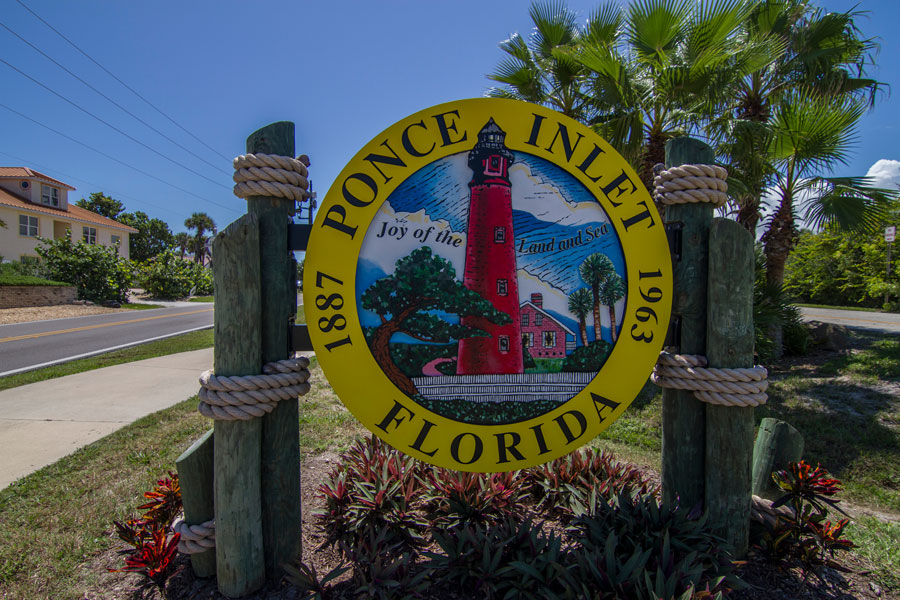
About The Community
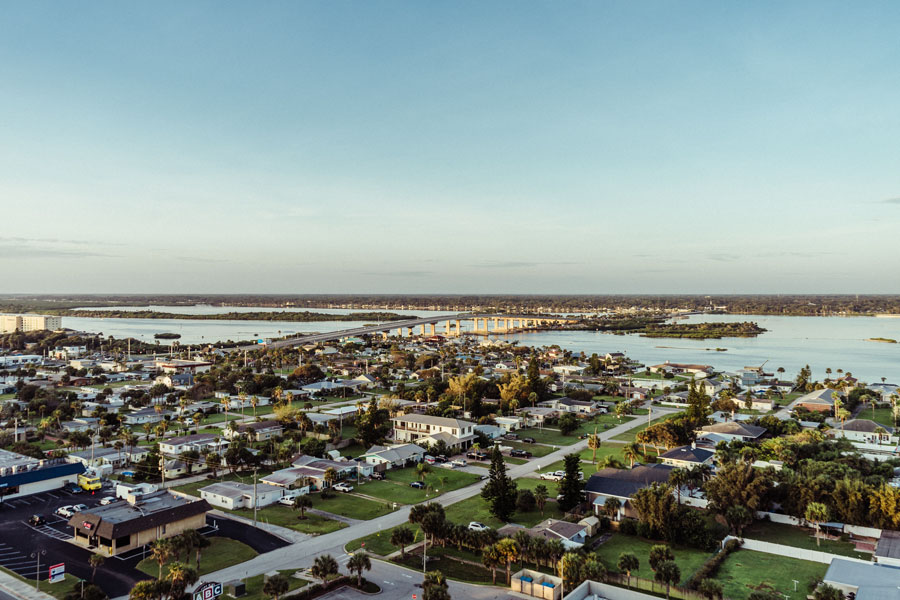
Ponce Inlet occupies a narrow stretch of Florida’s central Atlantic coast just south of Port Orange. Unlike the more heavily developed beach communities to the north, much of the town retains a quiet residential character with low-rise development, coastal vegetation, parks, marinas, and relatively easy access to both the ocean and the Halifax River. The 2020 U.S. Census recorded a population of 3,364 residents, making Ponce Inlet one of Volusia County’s smaller incorporated communities.
The town’s geography has shaped nearly every part of its history. The inlet provides a passage between the Atlantic Ocean and the inland waterways of the Halifax River and Mosquito Lagoon, making the area important to mariners, fishermen, lighthouse keepers, and coastal residents for generations. Today, recreational boating remains a major part of life in Ponce Inlet, with boat ramps, marinas, fishing areas, and waterfront restaurants clustered near the southern end of the peninsula.
The area’s recorded history extends back centuries. Spanish explorer Juan Ponce de León traveled along Florida’s Atlantic coast in the early 1500s, while later European settlement in the surrounding region included the New Smyrna colony established by Dr. Andrew Turnbull in 1768. By the early 1800s, Antonio Pons, a descendant of settlers from the New Smyrna colony, held land near the inlet. The community later became known as Ponce Park, while the waterway itself was historically called Mosquito Inlet.
Congress authorized construction of a major lighthouse at the inlet during the 19th century, and the present Ponce de Leon Inlet Lighthouse was completed in 1887. The inlet was renamed Ponce de Leon Inlet in 1928, and the surrounding community eventually adopted the Ponce Inlet name. The Town of Ponce Inlet was formally incorporated on August 20, 1963.
Important Links (Suggest / Report)

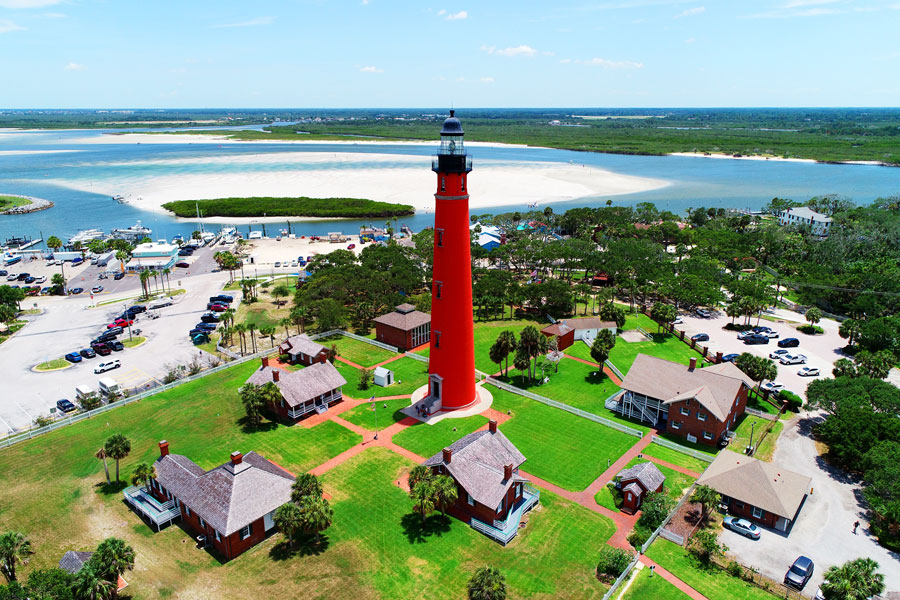
The best-known landmark in town is the Ponce de Leon Inlet Lighthouse & Museum. Completed in 1887, the 175-foot brick tower is the tallest lighthouse in Florida and remains one of the most recognizable historic structures along the state’s Atlantic coast. Visitors can explore the restored light station, museum exhibits, keeper dwellings, and historic Fresnel lenses, and those able to make the climb can ascend 203 steps for panoramic views over the Atlantic Ocean, Halifax River, inlet, and surrounding coastline.
The lighthouse also played an important role in the development of the modern town. After the U.S. Coast Guard discontinued the tower’s beacon in 1970, the federal government transferred the lighthouse property to the Town of Ponce Inlet in 1972. Preservation efforts restored the deteriorating site, and the light was eventually returned to service. The lighthouse complex is now preserved as a museum and historic landmark.
Just beyond the lighthouse, Lighthouse Point Park occupies the southeastern tip of the peninsula where the Halifax River meets the Atlantic Ocean. Beaches, boardwalks, dunes, fishing areas, and views across the inlet make this one of the area’s most scenic recreation spots. The rock jetties extending into the ocean are also closely associated with local fishing and surfing, while boat traffic passing through the inlet provides a constant reminder of the town’s maritime setting.
Nearby, the Marine Science Center introduces visitors to the coastal ecosystems and wildlife of Volusia County. Exhibits and rehabilitation programs focus on sea turtles, seabirds, marine animals, and the natural environments of Florida’s Atlantic coast. Its location near the lighthouse makes the two attractions easy to combine during a visit to the southern end of Ponce Inlet.
Nature is also protected within Ponce Preserve, the town’s largest park. Covering approximately 41 acres, the preserve stretches from the Atlantic Ocean across the barrier island to the Halifax River. Trails and boardwalks pass through dunes, maritime hammock, palmetto areas, and wetlands, while fishing, kayaking, birdwatching, and wildlife observation are among the recreational opportunities available within the park.
Ponce Preserve also contains the Green Mound State Archaeological Site, an ancient Indigenous shell midden that reflects a much longer history of human activity along this section of Florida’s coast. The preserve’s natural areas include mature native vegetation and an old live oak estimated to be more than 350 years old.
Vicinity of Ponce Inlet
Additional Details
Ponce Inlet is especially appealing to visitors looking for a quieter alternative to the busier sections of the Daytona Beach coastline. The town has no large downtown district or major commercial center. Instead, attractions are spread among residential neighborhoods, natural areas, waterfront locations, and the lighthouse district near the southern end of the peninsula. South Atlantic Avenue and South Peninsula Drive provide the principal north-south routes through town.
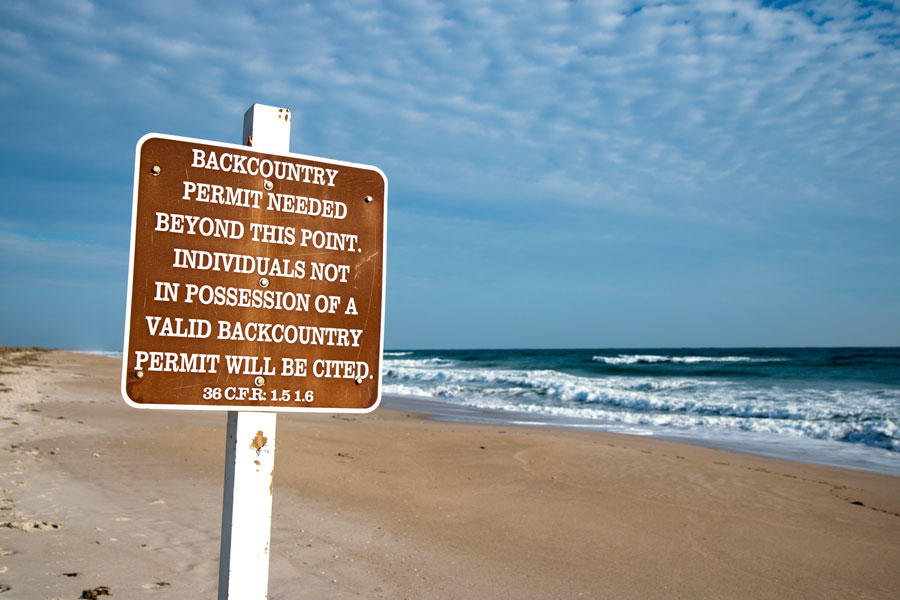
The beaches around Ponce Inlet are popular for swimming, surfing, fishing, beachcombing, and watching sunrises over the Atlantic. Conditions near an inlet and jetty can differ considerably from those along an ordinary open beach, however, so swimmers and surfers should pay attention to posted warnings, currents, weather, and local beach rules. The inlet itself also carries regular recreational and commercial boat traffic.
Boating and fishing are central to the area’s identity. From Ponce Inlet, vessels can reach the Atlantic Ocean directly or travel through the Halifax River and interconnected sections of the Intracoastal Waterway. Anglers pursue offshore species in the Atlantic as well as inshore fish around the inlet, river, jetties, and surrounding estuarine waters.
The town is also well positioned for exploring surrounding Volusia County destinations. Port Orange lies immediately to the north, while Daytona Beach and its attractions are farther up the coast. Across Ponce de Leon Inlet, the New Smyrna Beach area offers another well-known stretch of shoreline, surfing, boating, restaurants, and access to the waterways leading toward Mosquito Lagoon and Canaveral National Seashore.
For travelers, Ponce Inlet combines several of the features that define Florida’s Atlantic coast within a remarkably compact area. Visitors can climb the historic lighthouse, explore coastal habitats at Ponce Preserve, learn about local marine wildlife, fish from the shoreline, watch boats pass through the inlet, or spend time on the beach before continuing north toward Port Orange and Daytona Beach. Its protected natural areas and small-town atmosphere give Ponce Inlet a distinctly quieter character than many neighboring beach communities while still placing some of Volusia County’s best-known coastal attractions close at hand.