Temple Terrace, Florida
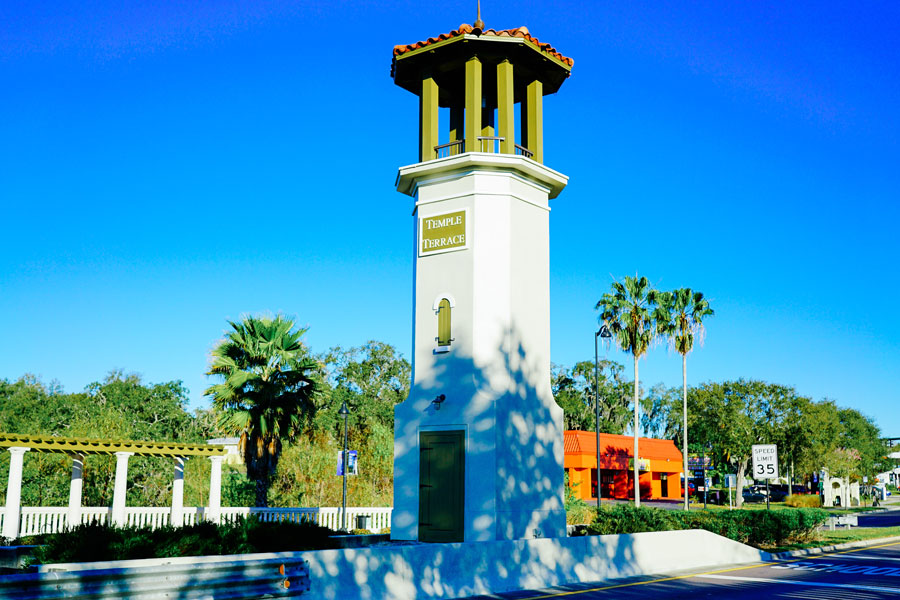
Temple Terrace is a historic city in north-central Hillsborough County, just northeast of Tampa and along the Hillsborough River. Its name comes from the once-famous Temple orange and the area’s naturally terraced river landscape. Today, the city continues to build on the vision of its founders while preserving much of its distinctive character, historic neighborhoods, and green space.
About the Community
The Potter Palmer family of Chicago bought the land that is now Temple Terrace in 1911 as part of a 6,000-acre winter hunting preserve. In 1918, developers acquired the property and organized Temple Terrace Estates, Inc. to develop the golf course and residential areas, and Temple Terraces, Inc. to develop about 5,000 acres of orange groves. By 1922, the city was surrounded by what was described as the largest orange grove in the world.
The original concept was ambitious: a golf-course community designed for affluent winter residents, with homes planned as seasonal villas and nearby citrus grove tracts. The neighborhood was laid out in the Mediterranean Revival style, and more than 85 notable homes were built. That early design still helps give Temple Terrace its distinctive historic feel today.
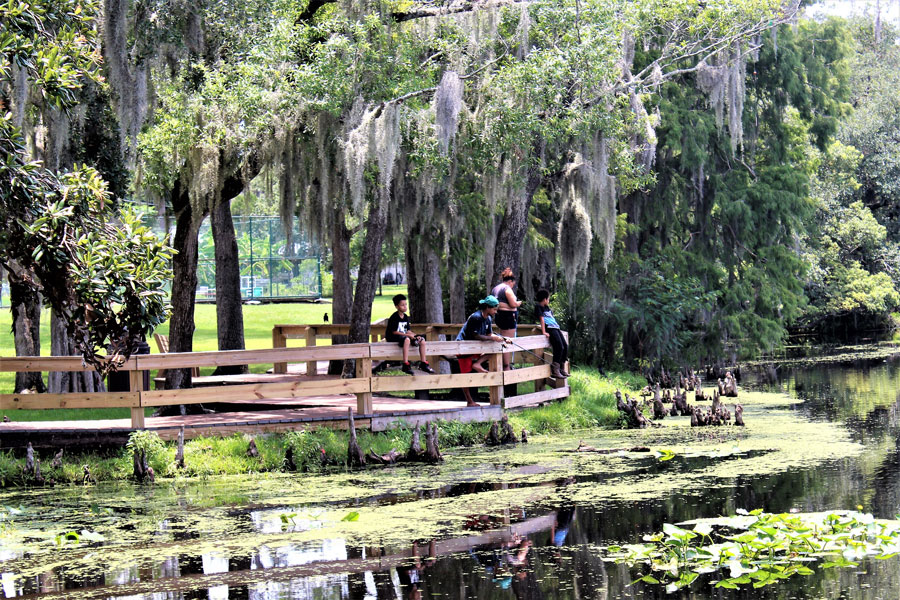
For visitors, Temple Terrace offers a quieter base near Tampa, with riverfront scenery, local parks, historic architecture, and convenient access to major attractions in the surrounding area.
Important Links (Suggest / Report)

Temple Terrace was incorporated in 1925, and the city enjoyed a lively early period during the Florida land boom. In the 1920s, the golf club and casino building were central to social life in the region, and well-known entertainers of the day appeared there. A severe winter freeze in 1927-1928, followed by the stock market crash of 1929, dealt heavy blows to both the city and its citrus economy.
Vicinity of Temple Terrace
Major development slowed for about two decades and then resumed after World War II. Temple Terrace expanded again in the 1960s, including annexation of nearby areas. Today, the city has a population in the mid-20,000s and continues to balance neighborhood growth with preservation of its historic identity, parks, and riverfront setting.
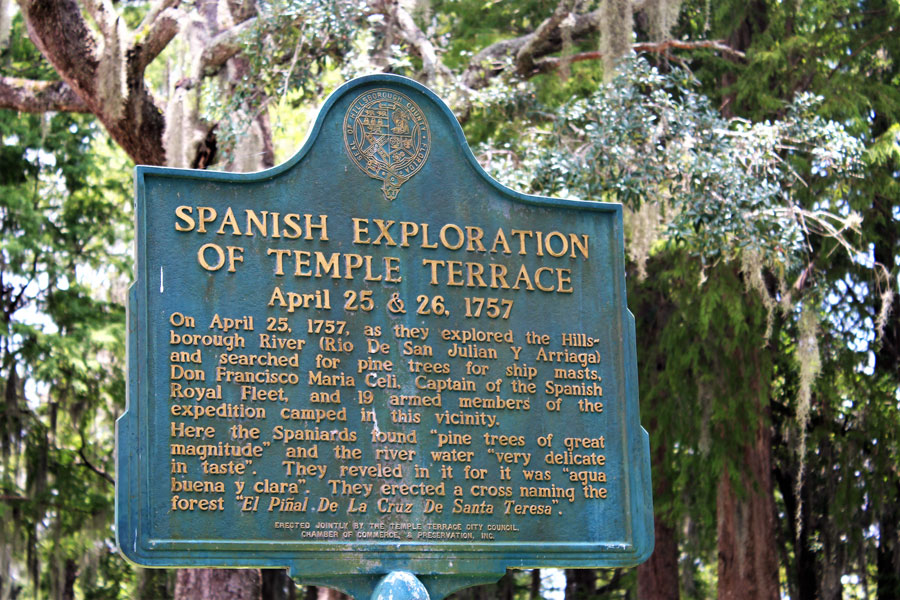
Temple Terrace has convenient access to I-4, I-75, and I-275. That location, along with the city’s tree-lined neighborhoods and riverfront scenery, makes it appealing to both residents and visitors. It is close to Tampa and St. Petersburg, and it is also within a manageable drive of Orlando and the Sarasota area beaches. Visitors also have easy access to major medical facilities, cultural venues, sporting events, shopping, and popular regional attractions.
The Temple Terrace Golf & Country Club was designed and built in 1921-1922 by noted golf architect Tom Bendelow. The course remains one of the city’s defining historic features, with mature trees, strategically placed bunkers, and a classic layout. The original clubhouse building survives as part of Florida College’s campus. According to local history, evangelist Billy Graham reflected on his future calling while on the 18th green in 1939, when he was studying at the Florida Bible Institute in Temple Terrace.