St. Marks National Wildlife Refuge
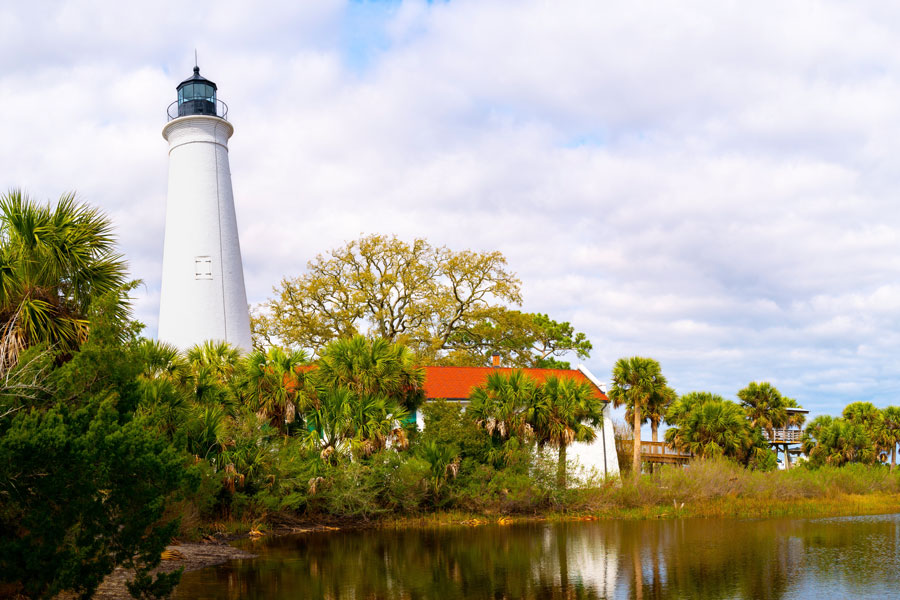
Spanning more than 70,000 acres across Wakulla, Jefferson, and Taylor counties, St. Marks National Wildlife Refuge is one of the oldest units in the National Wildlife Refuge System. Established in 1931, it protects an impressive range of habitats, including salt marshes, tidal creeks, freshwater impoundments, pine flatwoods, hardwood forests, and Gulf shoreline. For birders, photographers, paddlers, and anyone seeking a quieter side of Florida, the refuge offers a scenic and rewarding escape.
Highlights of St. Marks National Wildlife Refuge
- St. Marks Lighthouse:
The iconic St. Marks Lighthouse, first lit in 1831, is one of Florida’s oldest lighthouses and a signature landmark of the refuge. Set near the Gulf, it is a favorite for coastal views, wildlife watching, and photography. - Diverse Ecosystems:
The refuge includes a remarkable variety of habitats:- Salt marshes: Essential feeding and nesting areas for birds, fish, and other coastal wildlife.
- Pine flatwoods: Home to gopher tortoises and many upland species.
- Freshwater ponds and waterways: Good places to spot alligators, otters, wading birds, and fish.
- Coastal dunes and shoreline: Important natural buffers that also support specialized plants and animals.
- Wildlife:
The refuge is known for excellent wildlife viewing, including:- Hundreds of bird species over the course of the year, including bald eagles, red-cockaded woodpeckers, ducks, shorebirds, and migratory songbirds.
- Iconic Florida wildlife such as alligators, black bears, bobcats, and white-tailed deer.
- Seasonal monarch butterfly activity that draws visitors each fall.
- Migratory Bird Habitat:
St. Marks is an important stop along the Gulf Coast for migratory birds, making fall and winter especially popular seasons for birdwatching and wildlife photography.
Outdoor Activities
The refuge offers a wide range of low-key outdoor recreation centered on wildlife, scenery, and time in nature.
- Hiking and Biking:
- More than 40 miles of roads, levees, and trails provide opportunities to explore on foot or by bicycle, including the popular Lighthouse Levee area and portions connected with the Florida National Scenic Trail.
- Routes range from easy walks and wildlife drives to longer outings through varied habitats.
- Birdwatching and Wildlife Viewing:
Observation areas, pull-offs, and boardwalk-style viewing spots make it easier to watch birds, mammals, reptiles, and butterflies in their natural setting. Binoculars are highly recommended. - Fishing:
Fishing opportunities may be available in both freshwater and saltwater areas of the refuge, depending on access and conditions. A valid Florida fishing license is typically required. - Paddling and Boating:
Nearby rivers, creeks, and coastal waters offer paddling opportunities for canoeists and kayakers. Conditions can change quickly with tides, weather, and season, so plan carefully before launching. - Photography:
From sunrise over the marsh to close-up wildlife shots and historic lighthouse views, the refuge is one of North Florida’s most photogenic natural destinations.
Seasonal Highlights
- Monarch Butterfly Migration:
Each fall, monarch butterflies can be seen moving through the refuge during their southbound migration, creating one of the area’s most memorable seasonal wildlife spectacles. - Winter Birdwatching:
Cooler months are excellent for spotting ducks, geese, shorebirds, raptors, and other migratory species. Winter is often one of the best times for birding. - Spring Wildflowers:
Spring brings fresh color to the refuge, along with active pollinators and pleasant conditions for scenic walks and photography.
Educational Programs and Events
Interpretive programs and special events help visitors learn more about the refuge’s wildlife, habitats, and conservation mission. Availability may vary by season and staffing.
- Guided Tours:
Seasonal tours and ranger-led programs may be offered to share insights into the refuge’s history, wildlife, and management. - Nature Workshops:
Programs focused on birding, photography, native plants, and habitat conservation are sometimes available for visitors who want a deeper experience. - Annual and Seasonal Events:
- Monarch Butterfly Festival: Seasonal programming in the area may highlight monarch migration through exhibits, activities, and educational demonstrations.
- Wildlife and Heritage Festival: Past and seasonal events have celebrated the refuge’s ecological importance and regional history.
Facilities and Accessibility
- Visitor Center:
The St. Marks Visitor Center offers exhibits on the refuge’s history, wildlife, and conservation work. Staff and volunteers can often provide maps, current conditions, and trip-planning tips. - Picnic Areas:
Visitors will find picnic spots in select areas, offering a relaxing place to enjoy the scenery. - Restrooms and Parking:
Restrooms and parking are typically available near the visitor center and at several commonly used access points. - Accessibility:
Some facilities and viewing areas may be accessible, but conditions and access can vary. Check with the refuge for current accessibility details before your visit.
Vicinity of the Wildlife Refuge
Visitor Information
- Location:
The refuge headquarters and visitor center are located at 1255 Lighthouse Road, St. Marks, FL 32355. - Hours:
Refuge access is generally available daily, and the wildlife drive and outdoor areas often operate from sunrise to sunset. Visitor center hours may vary by date, season, and staffing, so check ahead before visiting. - Admission:
An entrance fee or pass may be required for some visitors and vehicles. Fees, pass acceptance, and payment options can change, so review the current fee details on the official refuge website before your trip. - Contact:
For current conditions and visitor information, call (850) 925-6121.
Nearby Attractions
St. Marks National Wildlife Refuge is within easy reach of other notable North Florida attractions:
- San Marcos de Apalache Historic State Park: A historic site where visitors can explore the region’s Spanish, British, and American past.
- Tallahassee: Florida’s capital city offers museums, parks, gardens, and dining options within a reasonable drive.
- Edward Ball Wakulla Springs State Park: Known for one of the world’s largest and deepest freshwater springs, plus boat tours and classic Old Florida scenery.
Tips for Visiting
- Bring Binoculars:
This is one of Florida’s standout birding destinations, and binoculars will greatly improve your wildlife-viewing experience. - Dress for the Outdoors:
Wear weather-appropriate clothing and sturdy shoes, and expect sun, wind, insects, and uneven ground in some areas. - Pack Supplies:
Bring water, sunscreen, insect repellent, and snacks, since on-site services are limited. - Check Conditions Before You Go:
Weather, tides, seasonal wildlife activity, and occasional road or trail closures can affect your visit.
Why Visit St. Marks National Wildlife Refuge?
St. Marks National Wildlife Refuge offers an exceptional chance to experience Florida’s wilder side. Whether you come for the lighthouse, the birding, the monarch migration, or simply the quiet beauty of marshes and coastal forests, the refuge delivers a memorable mix of scenery, wildlife, and history. It remains one of North Florida’s most rewarding destinations for nature lovers and outdoor explorers.
For more information, visit the official site: https://www.fws.gov/refuge/st-marks