Alligators in Florida Waterways
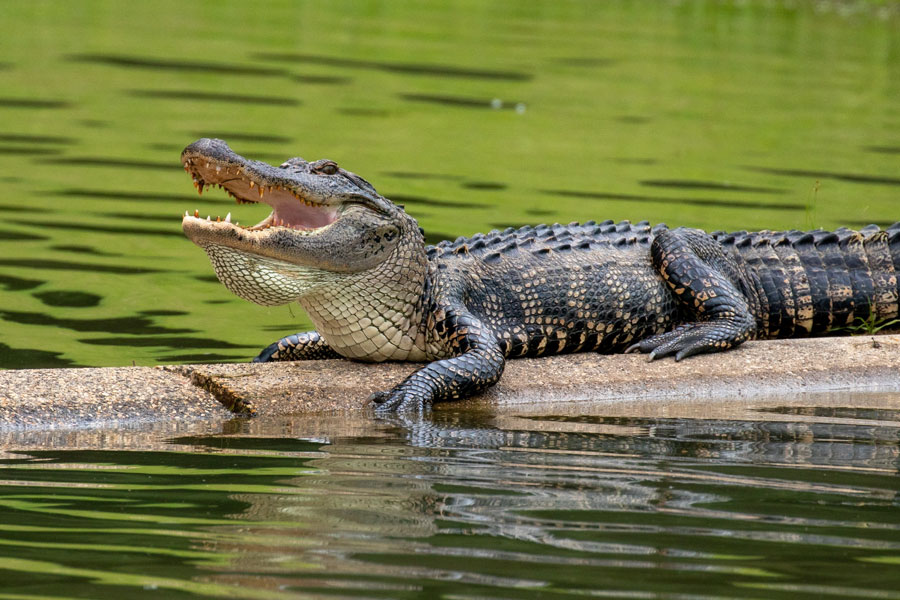
Alligators are a real part of life in Florida, and they should always be taken seriously around freshwater. While many visitors think first about sharks at the beach, alligators are often the more relevant wildlife concern in lakes, canals, ponds, marshy shorelines, and other inland waters. The good news is that most problems can be avoided with simple awareness and common-sense caution.
Florida has countless freshwater environments, and alligators can live in many of them. That does not mean every lake or shoreline is unsafe, but it does mean people should never assume inland water is harmless just because it looks calm or because no alligator is immediately visible. For a broader overview of ocean, freshwater, weather, and water-condition risks, see our Florida swimming safety guide.
Are Alligators Common in Florida?
Yes, alligators are common in Florida and can be found in many freshwater environments throughout the state. They are part of the natural ecosystem and may be present in places that look peaceful, scenic, or even residential. This includes not only wild areas, but also canals, golf course ponds, stormwater ponds, retention areas, and neighborhood lakes.
Because alligators are often quiet and hard to spot, the safer assumption is that freshwater can contain wildlife even when you do not see any obvious signs of it.
Where Are Alligators Most Likely To Be Found?
Alligators are most associated with freshwater, especially areas that have slower-moving water, vegetation, and natural shoreline cover. Places where extra caution makes sense include:
- Lakes and ponds
- Canals and drainage channels
- Retention ponds and golf course water hazards
- Rivers, marshes, and swampy areas
- Boat ramps, fishing spots, and shoreline edges
They are not generally associated with typical saltwater beach swimming, which is one reason ocean and freshwater safety should be thought about differently in Florida.
Are Alligators a Serious Risk to Swimmers?
Alligator attacks are not common compared to the number of people who live, fish, boat, and spend time around water in Florida. Even so, the risk is real enough that swimmers should not take chances in unofficial or unfamiliar freshwater areas. Most people get into trouble when they assume calm water is safe, ignore signs, approach wildlife, or let pets and children linger too close to the edge.
In practical terms, the safest rule is simple – if a freshwater area is not clearly designated and commonly used for swimming, do not treat it like a swimming spot.
Why Calm Water Can Be Misleading
One of the biggest mistakes people make is assuming that a quiet pond, canal, or lake looks safer than the ocean. In reality, calm freshwater can hide more uncertainty. You may not know the depth, the bottom conditions, the visibility, whether the area is routinely used by wildlife, or whether swimming is even appropriate there in the first place.
Florida visitors sometimes underestimate inland water because there are no waves and no surf. But a lack of waves does not mean a lack of risk.
When Should You Be Most Careful?
Extra caution is especially important around dawn, dusk, and nighttime, when visibility is lower and wildlife may be more active near shore. It also makes sense to be more alert around areas where fish are being cleaned, where birds or fish are active near the edge, or where an alligator has been seen before.
Pets should also be kept well away from the shoreline in freshwater areas, since splashing and movement can attract attention.
How To Reduce Your Risk
The best way to stay safe is to avoid putting yourself in the wrong setting. Helpful habits include:
- Swim only in clearly designated swimming areas
- Avoid canals, ponds, and retention areas
- Stay away from freshwater shorelines at dawn, dusk, and night
- Never feed alligators
- Do not approach or try to photograph them at close range
- Keep pets on a leash and away from the water’s edge
- Watch children closely around any freshwater shoreline
- Respect warning signs and barriers
Most alligator safety comes down to distance, judgment, and not treating wild or semi-wild freshwater like a resort pool.
What About Springs and Managed Swimming Areas?
Not all freshwater is equally risky. Some spring parks and managed recreation areas are known swimming destinations and may be safer choices than random inland shorelines because they are maintained, monitored, and clearly intended for water recreation.
The bigger point is that designated swimming areas are usually a smarter choice than unofficial access points or unmarked water edges.
What To Do If You See an Alligator
If you see an alligator, keep your distance and do not approach it. Leave the area calmly and do not enter the water nearby.
Alligators vs. Other Florida Swimming Risks
- Is It Safe to Swim in Florida?
- Rip Currents in Florida
- Are There Sharks at Florida Beaches?
- Water Quality and Advisories
- Safest Beaches for Swimming
- Most Dangerous Beaches
Overall Takeaway
Alligators are a normal part of Florida’s freshwater environment, and the smartest approach is to respect that reality rather than fear it or ignore it. Most problems can be avoided by choosing designated swim areas and keeping a careful distance from the shoreline.