Rip Currents in Florida
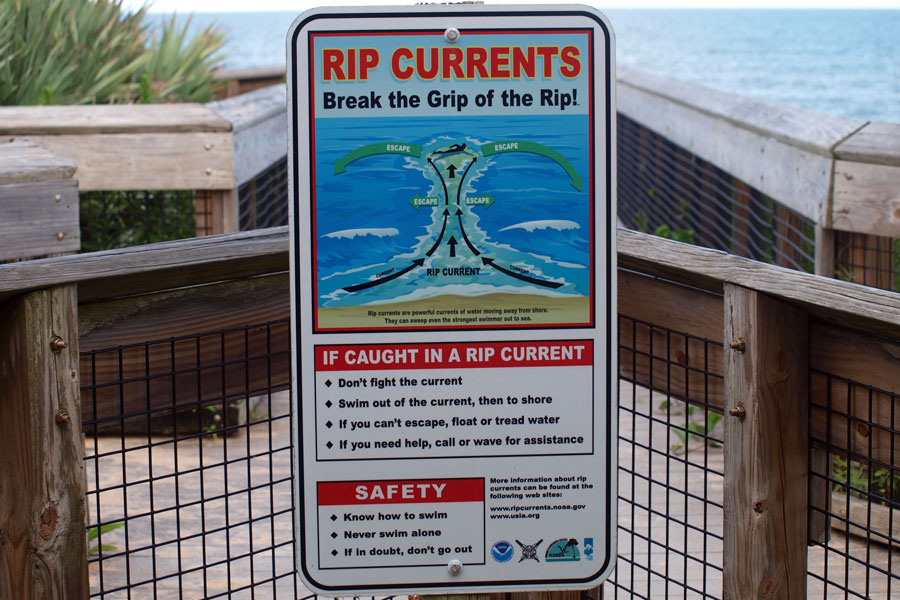
Rip currents are one of the most serious swimming hazards at Florida beaches and one of the biggest reasons beach safety should never be taken lightly. These strong, narrow currents move water away from shore and can carry swimmers away from the beach faster than many people expect. Because they often form on otherwise attractive beach days, they are especially dangerous for visitors who do not recognize the warning signs.
Florida’s long coastline, active surf conditions, and year-round beach traffic make rip current awareness essential for both tourists and residents. While sharks and storms often dominate headlines, rip currents are one of the more immediate and realistic dangers beachgoers may face when entering the ocean.
This guide explains what rip currents are, why they are dangerous, how to spot them, what to do if you get caught in one, and how they fit into broader Florida swimming safety. For a full overview of beach, weather, wildlife, and water-condition risks, see our Florida swimming safety guide.
What Is a Rip Current?
A rip current is a strong, narrow channel of water moving away from the beach and out through the surf zone. It is not the same thing as an undertow, and it does not typically pull swimmers straight under the water. Instead, it pulls people away from shore, which can quickly create panic, exhaustion, and dangerous decision-making.
Rip currents often develop where breaking waves push water toward shore and that water finds a faster path back out to sea. They commonly form near sandbars, piers, jetties, and breaks in the wave pattern.
Why Rip Currents Are So Dangerous in Florida
Florida is one of the most beach-oriented states in the country, and many of its Atlantic and Gulf beaches can experience rip current activity. The danger is not always obvious. Rip currents can happen on sunny days when the beach looks beautiful.
Many victims make the same mistake – they try to swim straight back to shore against the current. That usually leads to fatigue. Even strong swimmers can become exhausted if they fight the water in the wrong direction.
Are Rip Currents Common on Florida Beaches?
They can occur at many Florida surf beaches, especially when wave and wind conditions increase the push of water toward shore. Atlantic beaches are often associated with stronger surf and more consistent rip current risk, though Gulf beaches are not exempt.
Conditions vary by day, which is why swimmers should treat warnings seriously and understand broader beach conditions.
How to Spot a Rip Current
- A darker or deeper-looking channel of water
- A break in the pattern of incoming waves
- A section where waves are not breaking
- Foam or debris moving away from shore
- Choppy water between breaking waves
What To Do If You Get Caught in a Rip Current
- Stay calm
- Do not fight the current
- Swim parallel to shore
- Angle back toward shore once free
- Float and signal for help if needed
How To Reduce Your Risk
- Swim at beaches with lifeguards
- Check flags and warnings
- Avoid rough surf
- Stay closer to shore when unsure
- Watch conditions before entering
Are Rip Currents Worse at Certain Times?
Risk increases with stronger surf, changing sandbars, and unsettled weather conditions. A beach that felt safe previously may not be safe today.
Rip Currents vs. Other Florida Swimming Hazards
- Florida Swimming Safety Guide
- Sharks at Florida Beaches
- Alligators in Florida Waterways
- Water Quality and Advisories
- Safest Beaches for Swimming
- Most Dangerous Beaches
Overall Takeaway
Rip currents are one of the most important beach dangers to understand in Florida. The safest approach is to respect surf conditions, swim near lifeguards, and remember one simple rule – do not fight the current straight back toward shore.